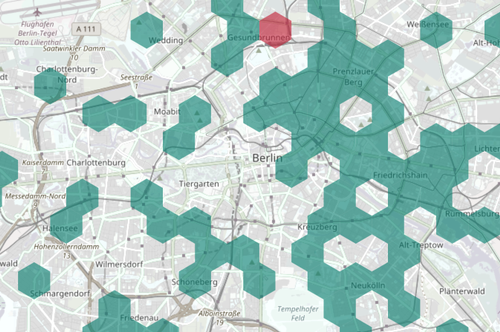
Fine particulate matter is a serious issue in many cities around the world. In Europe, it is estimated to cause 400.000 premature deaths per year. European Union has published standards on the matter, and warned several countries that haven’t been able to reach the safe limits.
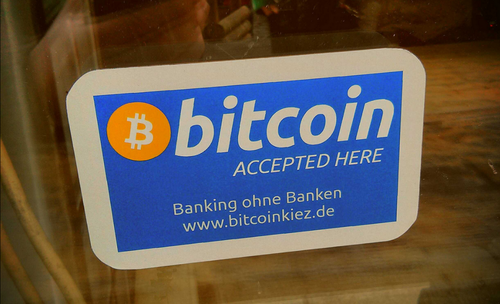
Bitcoin — the decentralized digital currency — has been making a lot of headlines lately. Much of this is driven by the current investment boom around it that has raised the exchange rates over the 1000 USD mark. But really, looking at Bitcoin as a medium for currency or asset speculation is a bad idea. Instead, we should see it...

Google Glass is coming this year, a wearable display that can keep you connected at all the times and supply information and instructions when you need them. And it can record video or take pictures of whatever you see, when you want it to.
Mozilla’s mission is to “build user sovereignty into the fabric of the Internet.—Mitchell Baker, in ExtremeTech article

These are tough times for fans of open mobile environments. Android is less and less open, Symbian was closed again, HP stopped making webOS devices, and now Intel abandoned MeeGo to work with Samsung and operators instead. So, what is the community to do? One option is to follow the lead of the big companies, hoping that Tizen works, or...
I’m getting worried about Google. Long one of the champions of the open web alongside Mozilla, the rise of social networking silos and the app economy seem to have scared them. And like any scared organism, they lash out.
Somehow I had missed this term being coined: The old "open vs. proprietary" debate is over and open won. As IT infrastructure moves to the cloud, openness is not just a priority for source code but for standards and APIs as well. Almost every vendor in the IT market now wants to position its products as "open." Vendors that don't...
Cory Doctorow on Locus: To understand techno-optimism, it’s useful to look at the free software movement, whose ideology and activism gave rise to the GNU/Linux operating system, the Android mobile operating system, the Firefox and Chrome browsers, the BSD Unix that lives underneath Mac OS X, the Apache web-server and many other web- and e-mail-servers and innumerable other technologies. Free...
In the coming years another billion people will get online. They will do it with their smartphones instead of what we consider computers. And their experience will be quite different from ours when we initially started using the internet.Despite its promises, it looks like the post-PC ecosystem will be a lot more restrictive than the PC one was even in...
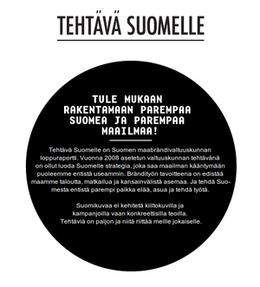
Finland's national brand strategy project released their report today on the Tehtävä Suomelle website. The basic idea is to promote the Finnish capability for getting things done, and the communal approach to problem solving. I found the beginning of the Finland - It Works document particularly interesting: "Just a hobby, won’t be big and professional" 25 Aug 91 20:57:08 Newsgroups:...
Benjamin Bayart, FDN: effects of the Internet are subject to Newtonian laws of reaction and counter-reaction. Compare printing press vs. copying monks to RIAA today
Douglas Coupland: A radical pessimist’s guide to the next 10 years:
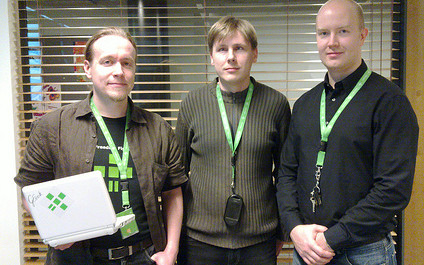
Free Software Foundation Europe, has recently expanded by the addition of a Finnish country team. FSFE is a non-profit organization dedicated to ensuring software freedom, which is an important building block in an open information society. The current Finnish team includes Otto Kekäläinen of VALO-CD, the distribution of free software applications for Windows as the country coordinator, and Henri Bergius...
Dave Neary summed this up well: ...I fundamentally disagree with discouraging someone from pursuing a technology choice because of the threat of patents. In this particular case, the law is an ass. The patent system in the United States is out of control and dysfunctional, and it is bringing the rest of the world down with it. The time has...
Quite a good blog post from the security expert: The old timesharing model arose because computers were expensive and hard to maintain. Modern computers and networks are drastically cheaper, but they're still hard to maintain. As networks have become faster, it is again easier to have someone else do the hard work. Computing has become more of a utility; users...
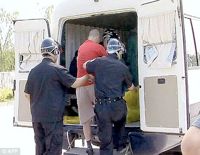
From USB fingers and flying cars to Chinese death vans, I think we need to agree that the future is now. It is just not (thankfully) evenly distributed. Inside each 'death van' there is a dedicated team of doctors to 'harvest' the organs of the deceased. The injections leave the body intact and in pristine condition for such lucrative work....

So, the controversial Lex Nokia passed today, with 47 members of parliament absent. Here we go:
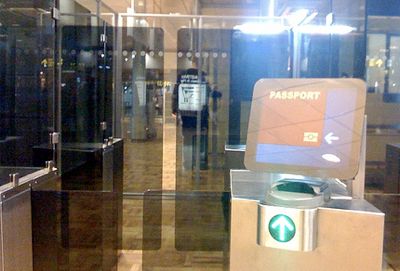
I have criticized the remote-readable EU passports before, but today I got to try their benefits: the automated border controls at Helsinki-Vantaa airport. I was returning back from Switzerland, and although they've recently joined the Schengen treaty, air passengers are still checked for passports until March. This means that the Finnair flight still ended up in the non-Schengen terminal of...
Lex Nokia, the controversial snooping law is about to pass in the Finnish Parliament pretty soon, the latest of a series of clueless, unconstitutional laws passed because our MPs are just hopelessly out of touch with the modern world (well, except one). This means that soon in addition to the Swedish, any organization providing you an internet connection can listen...
According to recent Helsingin Sanomat poll, 73% percent of Finns aged 55-64 years wanted to "control" the Internet, removing freedom of speech as necessary, in the light of the recent school shootings. I've got very little to say to them, except: "Those who would sacrifice freedom for security deserve neither" - Benjamin Franklin Every knee-jerk reaction like this only fights...
While last year Finnish courts decided that breaking ineffective copy protection is legal, it seems this year the ruling has been reversed. Quick translation below: Sihvo was sentenced into 30 day-fines. When deciding the judgement the court took into consideration that Sihvo had turned himself in to the police... Again in this trial the key point was whether CSS copy...

The Free Software Foundation's GNU project turned 25 last week, and the English humorist Stephen Fry made a video to commemorate it: Benjamin Mako Hill posted some thoughts on how the first generation of free software developers has grown: Certainly, GNU has matured and accomplished wonderful things in last quarter-century. More importantly perhaps, it's produced wonderful progeny. It has spawned...

Just some pictures from happier days:
Best wishes to my friends in Tbilisi in these hard times.
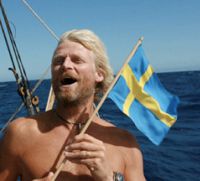
We thought the country of Big Brother might be China, or maybe UK. But looks like the Swedish are eager to get there first. Sweden passed a controversial wiretapping law: Sweden on Wednesday adopted contentious legislation that will give officials sweeping powers to eavesdrop on all e-mail and telephone traffic that crosses the Nordic nation's borders. ... "This is just...
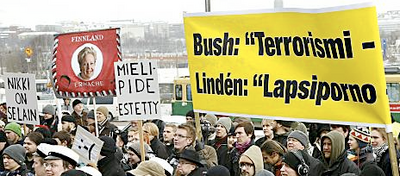
Since late 2006 Finland has been quietly enacting its own form of Internet censorship, a practice more typically connected with various oppressive regimes, and not with a democratic country. The Finnish variation is a DNS blocking system ostensibly targeted at child porn. The system is however very dubiously implemented using secret block lists maintained by the police, and it blocks...
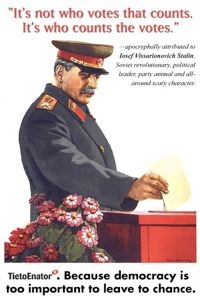
According to the Finnish Ministry of Justice, the new electronic voting system that will be used in next municipal elections is a proprietary system. This means that Finland enters the era of Black Box Voting where the algorithms used for counting votes are secret and there is no paper trail. Electronic Frontier Finland (Effi) writes: "Companies may have business secrets,...
A week ago I spent some time in Berlin representing the Finnish Centre for Open Source Solutions (COSS). The event was about building a new pan-European network for Open Source companies.
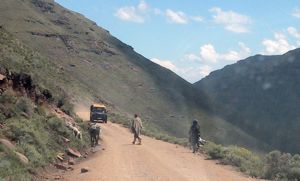
A BBC article is reporting how cell phones have become ubiquitous in the developing world, and how they instead of "regular" computers will be the communications, learning and business platform in many of those regions. If I had told you ten years ago that by the end of 2007 there would be an international network of wirelessly-connected computers throughout the...

COSS - the Finnish Centre for Open Source Solutions - is a national development agency for open source business ecosystem. COSS consists of 125 Finnish Open Source companies, several universities and public administration.
This is mostly old news, but The Pirate’s Dilemma - an excellent post on open innovation - highlighted it quite strongly: Roughly two-thirds the world’s 150 largest economies aren’t nations, but corporations.
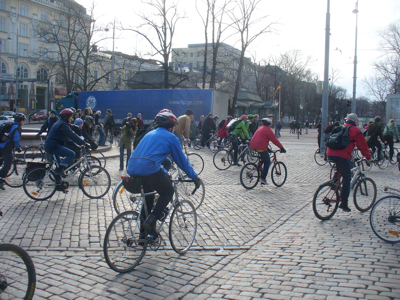
I’ve written earlier how open data availability could promote public transportation. Openly available public transport schedule and route information would enable small businesses and other innovators to build new kinds of consumer route planning services. These new services in turn would help to make it easier to leave the car home and choose more sustainable transport options.
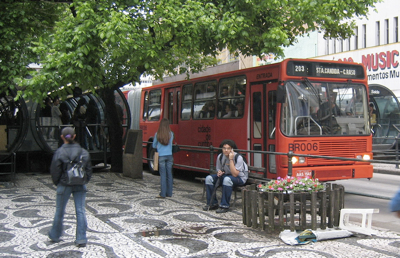
Public transport is efficient, cheap and quite green, which is why I’ve been very happy about new services hitting Helsinki Public Transport, like WiFi connectivity, and of the fact that nowadays it is possibly to wait for Espooi buses comfortably inside and underground. However, having used public transport in dozens of cities and countries, I’d say the biggest hindrance to...
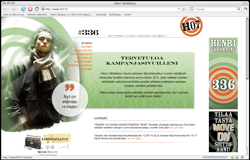
Finnish parliamentary election of 2007 was last Sunday. Unfortunately my candidate, Mikko Rauhala from the Liberal party and of Electronic Frontier Finland fame didn’t make it.
Defense policies of Finland on whether we should join the NATO aside, I just hope I never will have to write a blog post like this:
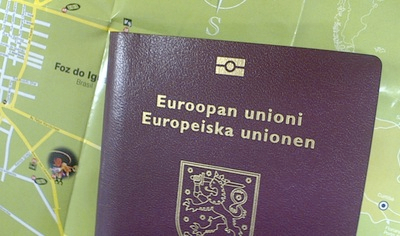
Guardian reports that the British RFID passports are now cracked, meaning that their information can be remotely read, and the passport copied:
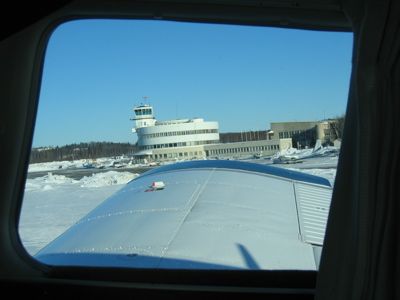
The Supreme Administrative Court has ruled that Lord Mayor Jussi Pajunen was disqualified to decide the fate of the historic Helsinki-Malmi airport. Helsingin Sanomat reports:

Public Geo Data is sending an open letter to the European council of environment ministers to request that the access to geographical databases would be opened to the public. While some data is open and available, we’re still far behind the US in this issue.
It seems that OSCON 2006 has sparked discussion about the relevancy of free software in the software as service world that Web 2.0 is taking us to. If all collaboration and data is tied to remote web servers controlled by some commercial entity, where do the four freedoms fit?

According to the DesktopLinux.com article, Nigeria, Brazil, Argentina, and Thailand have each now ordered a million 100$ laptops for use in education.
Amnesty International is campaigning against Internet censorship:

Montenegro (Crna Gora in the slavic languages) voted for independence yesterday. Hopefully the split from Serbia happens peacefully.

I met the Free Software Foundation Europe president Georg Greve in the FISL 7.0 conference two weeks ago. Seems like the organization is doing lots of good fighting software patents and other threats here in Europe.

I just finished my Digital Business Ecosystem talk in the 7th International Free Software Forum, Porto Alegre.
Finland for Thought continues criticizing the welfare state:

Helsingin Sanomat, which originally had a very aggressive stance against the airport, has now published its gallup results saying majority of Greater Helsinki inhabitants want to keep Malmi Airport as-is:
Kai Puolamäki from Electronic Frontier Finland (EFFI) has a very good blog post in Finnish summarizing the recent developments in digital rights:

Sun’s Jonathan Schwartz is talking about the environmental impact of the Internet:
A year ago, I spent a Weekend in Ukraine and saw the Orange Revolution begin:

The riots in France are running for the 12th night, and the country is now in state of emergency. John Robb of Global Guerillas is analyzing the situation:
John Robb explains what happened:
In a smashing victory for European software business, the EU parliament has voted 648-14 against the controversial software patent directive. Thanks to everybody involved!
Against the decision of European Parliament, the EU Council has approved the software patent directive against its own rules. This was a clear example of how big business lobbies can thwart the democratic process, in this case threatening local IT innovation and opening the door to ridiculous US-style intellectual property lawsuits. This is a sad day for the European economic...
EU ministers of agriculture will have a fishery meeting on Jan 24th. The meeting agenda includes software patents. The agriculture ministers tried to make a decision on the new European Patent directive earlier, but the Polish agriculture minister, Wlodzimierz Marcinski saved European software business by requesting the withdrawal of patents from the agenda. I've written the following (in Finnish) to...
The secondary airport of Helsinki and an important historical monument, Helsinki-Malmi (EFHF) is now under threat of demolition from the City planning council. This would rid Helsinki of its only airport accessible to smaller planes and effectively kill a whole branch of Finnish aviation industry. Threat to aviation and security Closing Helsinki-Malmi would remove Finland of its second-busiest airport. In...