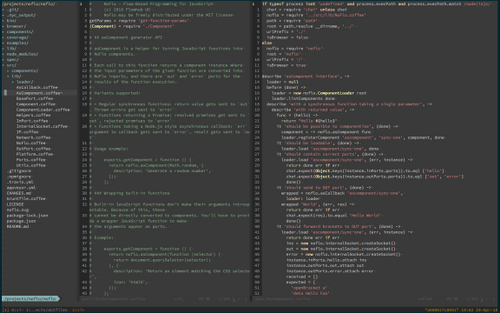
When I’m not in Flowhub-land, I’m used to developing software in a quite customized command line based development environment. Like for many, the cornerstones of this for me are vim and tmux.
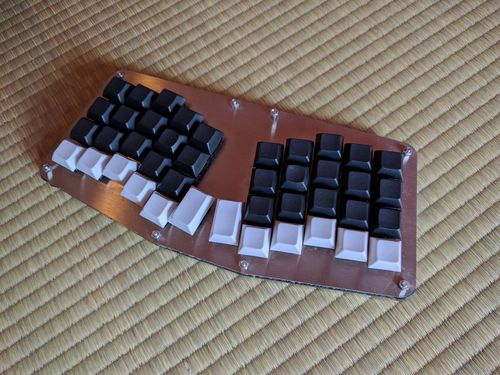
As mentioned in my Working on Android post, I’ve been using a mechanical keyboard for a couple of years now. Now that I work on Flowhub from home, it was a good time to re-evaluate the whole work setup. As far as regular keyboards go, the MiniLa was nice, but I wanted something more compact and ergonomic.
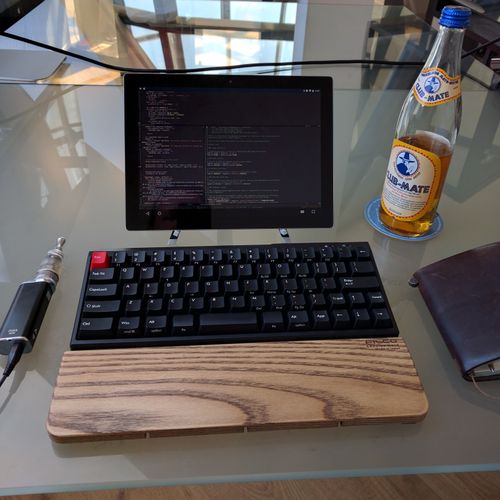
Back in 2013 I was working exclusively on an Android tablet. Then with the NoFlo Kickstarter I needed a device with a desktop browser. What followed were brief periods working on a Chromebook, on a 12” MacBook, and even an iPad Pro.

Those that have been following my blog for a longer time know that I’ve been talking a lot about making the Linux desktop and mobile platforms location aware.
The eagerly waited Leap Motion controller is now out, and reviews are pouring in. Most of them see the promise but find the current experience frustrating:
The growth of mobile web users is staggering. While some of us have been browsing the web on mobile devices for nearly ten years, most of the world population is only now getting there.
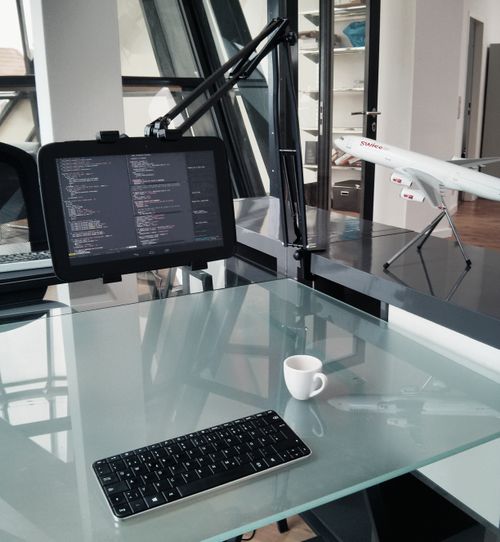
I’ve been working full time on my Android workstation for over a month now, and it is time to write an update about it. How has it worked out?
iPad is three years old now, and many tech blogs are writing stories to reflect what has changed. More than 100 million of them have been sold, alongside other popular tablets like the Kindle Fire and Nexus 7. But originally the reception was quite sceptical.

Google Glass is coming this year, a wearable display that can keep you connected at all the times and supply information and instructions when you need them. And it can record video or take pictures of whatever you see, when you want it to.
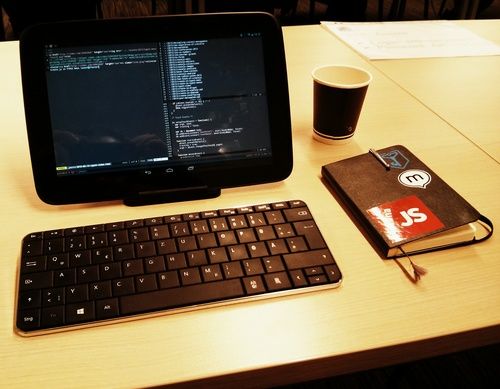
As mentioned in my post Hacker-nomad’s toolkit, 2012 edition, the lease period of my lovely — Linux-driven — 11” MacBook Air expired this month, and I had to consider what kind of gear to go with next.
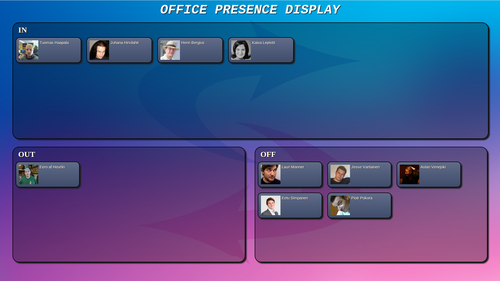
As part of the SmarcoS project, we have been investigating how to make workplaces smarter through sensors and context awareness. Here is a video showing what we’ve built:
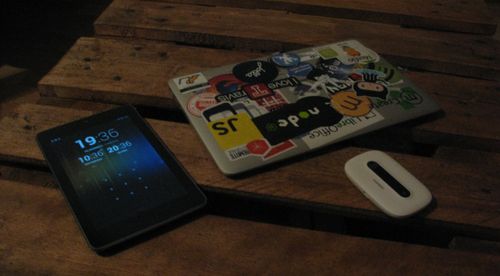
Back in last July – when choosing photos to use in the epic The Dreams of the MeeGo Diaspora post – I noticed that it is quite fascinating to look at the various tablets and mobile phones we’ve been using over the years. Back then they all were so new, shiny, and exciting, and yet hardware moves so fast that...
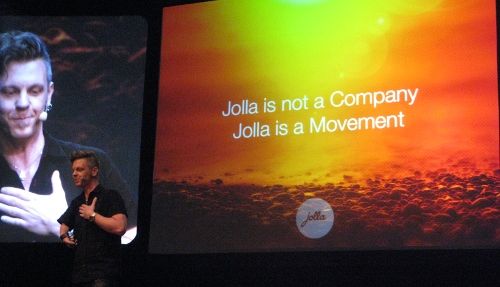
This week has been a busy one for a hacker-nomad. Weekend in Paris for the JS.everywhere conference, then on Monday a talk at the Hamburg JavaScript meetup. And now I’m in Helsinki. Slush, the conference I’m attending, is the biggest start-up event in Nordic countries. But even at that, it seems the Jolla announcements of today have been able to...
Tablet usage is growing rapidly. Ars Technica wrote about an interesting study today:
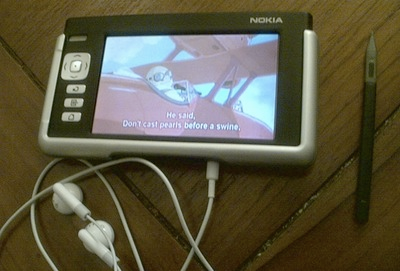
Much has been written about the emerging Post-PC era, about the new possibilities it brings, and the limitations it imposes on developer creativity.
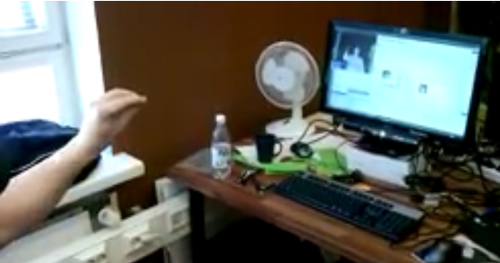
If today’s Google I/O keynote where they parachuted to the conference center from a Zeppelin while streaming the whole experience on a Hangout via Project Glass wasn’t enough future for you, here is another thing.
Great post by John Lilly discussing why PC will be the truck:
As mentioned in the earlier call for presentations, we're running a track on Open Mobile Linux in FOSDEM this Saturday. Room AW1.120 at the ULB campus in Brussels. From the CfP: Our primary goal is to facilitate meetups, collaboration and awareness between different projects and communities within Open Mobile Linux and provide a place to present directions, ideas and your...
At FOSDEM 2012 we will have a devroom related to Open Mobile Linux. Our primary goal is to facilitate meetups, collaboration and awareness between different projects and communities within Open Mobile Linux and provide a place to present directions, ideas and your projects themselves. By Open Mobile Linux we mean any open source projects revolving around typical non-desktop/server Linux, such...
Qt 5 is bringing JS at the same level of support as C++—Quim Gil, Nokia

These are tough times for fans of open mobile environments. Android is less and less open, Symbian was closed again, HP stopped making webOS devices, and now Intel abandoned MeeGo to work with Samsung and operators instead. So, what is the community to do? One option is to follow the lead of the big companies, hoping that Tizen works, or...
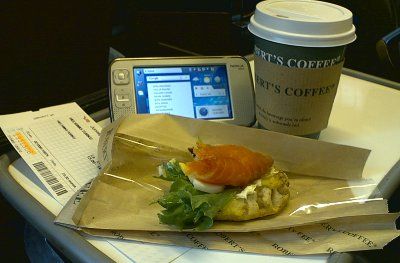
The press is writing a lot about a "post-PC ecosystem" these days, and while many dismiss tablets as simple toys, I think the world of computing is undergoing a major shift. Tablets may not be good for writing, but they are good, probably better than PCs for a lot of other things. And it turns out, people want to be...
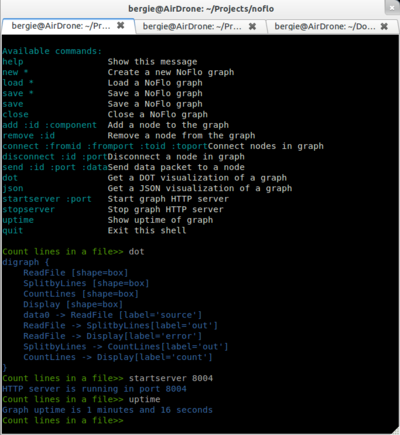
Like many, I'm currently in Berlin for Desktop Summit, the combined conference of the GNOME and KDE communities. It is a lot of fun to see all the familiar faces, and talk about the different projects going on! Now, one of the things I've talked about with people is NoFlo, my new tool that brings Flow-Based Programming to Node.js. What...

Disclaimer: I’m a software developer with a background in Nokia’s Maemo mobile Linux ecosystem. I’ve built both software and community services for it. As a Maemo enthusiast, I’ve also been following MeeGo with interest, and am helping to build some of the project infrastructure there as well. But I do not speak with the authority of the MeeGo project, and...
This weekend, after Falsy Values, I will be flying to San Francisco for a couple of weeks. There are some conferences: MeeGo Conference, May 23-25 Aloha Editor dev con, June 6-8 However, as there is quite some time between these two events, it would be interesting to meet cool people and/or projects. So if you're in the area, drop me...
JavaScript Development for Multi-Touch Web Browsers
True disruption would be a smartphone that doesn’t need an App Store—Nokia Fellow Mikko Terho, speaking in the Finnish MeeGo Summit. Rhymes quite well with the ideas of a Universal Runtime.
This weekend is the first-ever Finnish MeeGo Summit, held in Tampere in the same venue where we had aKademy last summer. Despite some announcements, the conference sold out in a very short time. The program looks very interesting, too. I'll give two talks: Location awareness in MeeGo, Hacks & Tricks track Friday 15:30 Midgard Create - Content Management System without...
There is currently quite stern discussion going on between GNOME, Canonical and KDE about collaboration on the free desktop. Angry words have been written, and I believe much of the tension arises from the situation with MeeGo. Suddenly many developers and projects feel much more marginalized than what the future looked like, pre-112. Hopefully cooler heads will prevail before the...
In the coming years another billion people will get online. They will do it with their smartphones instead of what we consider computers. And their experience will be quite different from ours when we initially started using the internet.Despite its promises, it looks like the post-PC ecosystem will be a lot more restrictive than the PC one was even in...
Wow, 2010 was quite a hectic year in the Midgard world. Here is a quick summary: We held three Midgard Gatherings: one in Lodz, Poland in April, one in Tampere, Finland in July and one in Gothenburg, Sweden in November. In April we announced the new directions of the project. The project completed a migration to Git (and GitHub) for...
Tim Bray on the new mobile market: Tablets and handsets can displace computers as play and reading devices, but they really can't become dominant as work tools until we have a better solution for high-speed low-friction text input. On the other hand, I wouldn’t be surprised to see dramatic progress in this area; it’s so obviously the number-one usability barrier...
Next Wednesday will have the annual Finnish Centre for Open Source Solutions member meeting and the Helsinki MeeGo Network meetup held together in Hotel Scandic Continental. The COSS meeting starts at 4pm, continuing with the MeeGo meetup at 6pm.
The event will be keynoted by Nokia's MeeGo Developer Advocate Ronan Mac Laverty. Register now!
You can tell this is a big conference: registration is a chaos, and keynote room doesn’t have enough chairs. Lots of familiar faces! This is like half of this year’s conferences compressed together.
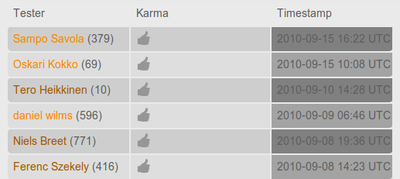
We had a session about application QA in last weekend's GSoC Mentor Summit. I explained how the Maemo Downloads approval process works in a completely open, crowdsourced way. This differs from many distributions where approval of new packages involves obscure decisions and secret handshakes. Some guidelines: Separate your core distribution and application packages Approval process should have three layers: development,...
Jos Poortvliet did an interview with me for dot KDE in this summer's aKademy and it has been online for a while now. In it we discuss things like Midgard as a storage engine for desktop applications, and Maemo's open QA process for Downloads applications. Some excepts: At maemo.org we have an appstore for FOSS applications on the Maemo platform....
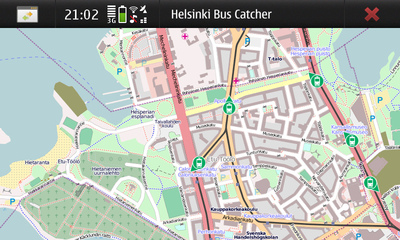
Opening public data is a hot topic in Finland at the moment. As a small experiment with the data that is available I wrote buscatcher, a simple N900 app that displays Helsinki trams (and some buses) moving on a map in real time. This makes it easy to determine when your next tram is coming to the stop, or where...
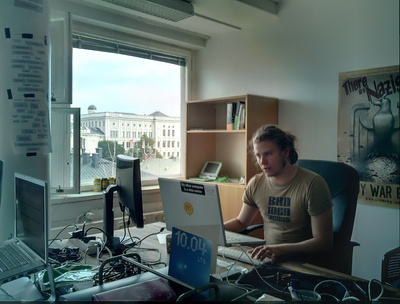
Frankencamera, or fCam, the open source computational photography platform from Stanford's Camera 2.0 project was unleashed for the Nokia N900 this Wednesday. PhysOrg has a story outlining the significance of this: Computational photography refers to the ways computers can extend the capabilities of digital imaging by combining multiple photographs taken with different camera settings to create an image that could...
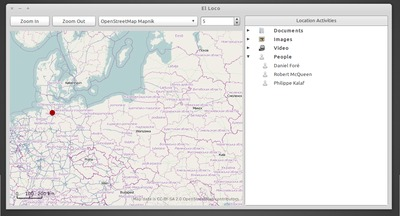
Zeitgeist, the desktop activity logging engine is now becoming geo-aware. From Seif Lotfy's blog: It allows you to ask Zeitgeist stuff like “Get me the recent files I edited at university” “Who do I contact most when I am at School?” “Which pictures did I take in Brazil?” “Where was I when an Email came in?” “What files did I...

We tried to get the combined GUADEC and aKademy conferences to Tampere in 2009, but a warmer place unfortunately won. However, we will be hosting this year's aKademy so at least KDE and Qt fans will get to enjoy this beautiful northern industrial city. The main conference will be held at the Tampere University over the weekend, and then the...

Midgard2 10.05 "Ratatoskr" was released yesterday, moving the Midgard Content Repository into long-term supported state as outlined in my recent post. Ratatoskr should provide a stable storage system for both desktop and mobile application developers. Web developers will also benefit from Midgard MVC, the PHP framework that already runs services like Qaiku.com. The release includes: Content Repository API bindings for the...
After a long hiatus there was a new GeoClue release 0.12 last week. GeoClue is a D-Bus service that Linux applications can use to obtain user's current position and convert between human-readable addresses and coordinates. As location-aware services are becoming more important and computers more mobile the free desktops should also be aware of where they are. Dadadi Blog writes:...
I'm doing a talk today in the Bossa Conference about using Midgard as a content repository for mobile applications. As part of my presentation I wrote some simple example code for using the Midgard APIs in Python, and thought they would be good to share to those not attending the event as well. The idea of a content repository is...
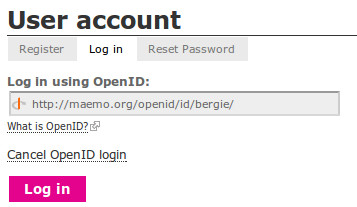
MeeGo is the new mobile Linux platform developed by Nokia and Intel. As the community is forming up, we thought that it would be good to enable people to use their maemo.org identities also on the MeeGo web services (as well as on any other OpenID enabled website). For this, let me introduce Maemo's OpenID provider. First of all, go...

Bossa Conference, an event about mobile development with free software technologies will be held on March 7th-10th in Manaus, Brazil. This year I'm speaking about using Midgard as a replicated storage layer in mobile applications, with examples for multiple programming languages and toolkits. The idea behind the Midgard content repository is that instead of coming up with your own file formats you can...
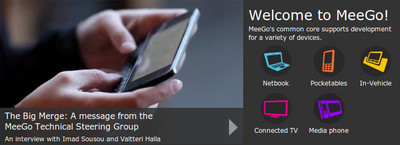
Nokia's Maemo and Intel's Moblin are merging to form MeeGo, a development environment for a new class of internet-connected devices ranging from smartphones through netbooks to TV sets. This may be finally what provides the free software world with a consistent and modern alternative to the iPhones and iPads that the proprietary world has come up with, the "magical user...
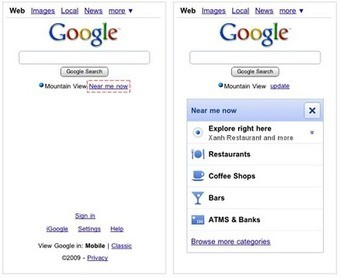
Google launched a new mobile web service called Near Me Now that can recommend things like restaurants, bars and ATMs near you. This uses browser geolocation to provide only results relevant to where you are. The idea is quite good: to replace business directories like Yelp or eat.fi with something that is easily accessible from Google's homepage and uses Google's...
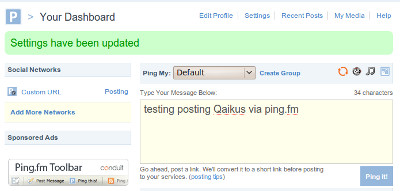
Ping.fm is a useful tool if you have friends on many social networks as it allows you to write updates to all of them via a single interface. In addition to the web interface there are many tools that allow posting to ping.fm, including SMS and applications for Android handsets and the iPhone. So far a problem with ping.fm has...
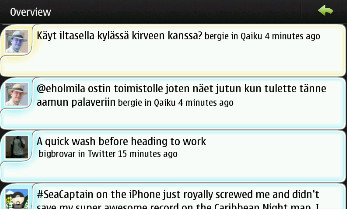
Microfeed is a new D-Bus service for handling status updating and microblogging entries from various services. Just like Telepathy allows various applications to utilize instant messaging connections, Microfeed does the same for microblogging: Microfeed is a specification and a reference implementation of client-server architecture providing access to various information sources that have a feed-type interface. Examples of those feed sources...
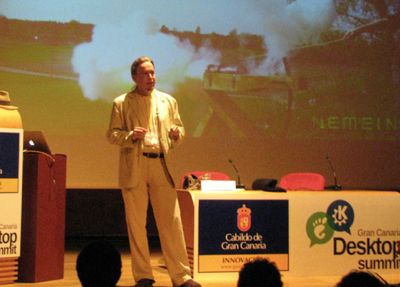
After a brief summer motorcycling break the fall is shaping up to be quite full with conferences. Here is the current list: September 30th - October 1st: OpenMind and MindTrek in Tampere, Finland I'll give a talk about the Midgard project and how our company has evolved together with it. In addition Linux-tekijä awards, where I was in the awards...
MDK laments the demise of the simple file in the onslaught of storage services: Sure, the applications still give you a way to share things and take them out of the storage. You can export a contact out of your address book as a vcard file. But the role of The File here is slowly being reduced to a role...
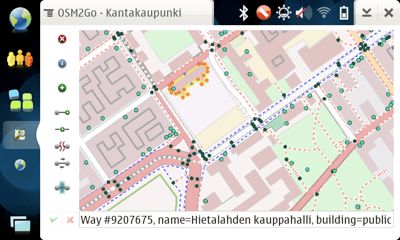
Today in the State of the Map conference I gave a lightning talk introducing Till Harbaum's OSM2Go, a wonderfully simple tool for contributing to OpenStreetMap. If you want to contribute to a freely available map of the world, download OSM2Go to your tablet and start mapping! My slides are available on SlideShare. See also my Qaiku notes for SoTM day...
I gave my Midgard2: Content repository for desktop and the web talk yesterday in GCDS. The slides are available on SlideShare. The main idea was that any application that deals with structured data could benefit from using a content repository like Midgard2 or CouchDB. So, what is a content repository? It is a service that sits between an application and...
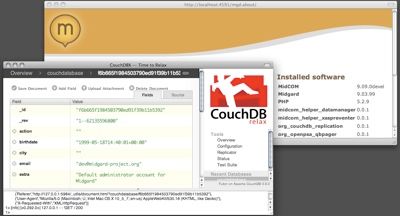
CouchDb is a really cool document-oriented map/reduce database that is nowadays an Apache project. Previously we created the distributed CRM application Ajatus on top of the system and ported CouchDb to Maemo. Here in Gran Canaria Desktop Summit CouchDb has been somewhat a hot topic, as the Ubuntu project is planning to use it as the content repository for desktop...
Qaiku's twitter-like API has been one of the first major contributions I've made to the project, and it is great to see some first applications start to use it. Here are some examples: Mauku is a microblogging client for Maemo. The new Fremantle version supports Qaiku nicely: Gwibber is a Linux desktop microblogging client. Qaiku support is now available in...
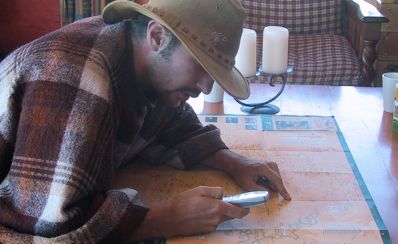
As I've written before, the cell phone is the computer for majority of world's people. Google's new set of SMS services for Africa follows this idea in an interesting way: ...mobile applications which will allow people to access information, via SMS, on a diverse number of topics including health and agriculture tips, news, local weather, sports, and more. The suite...
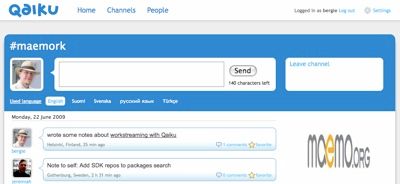
Workstreaming means collecting activities of geographically dispersed team members into a consistent news feed, enabling managers to track process and colleagues to stay up-to-date with the day-by-day happenings. As maemo.org is a distributed project worked on by a group of both volunteers and paid employees, some sort of activity monitoring is quite necessary. For a while this has been done...
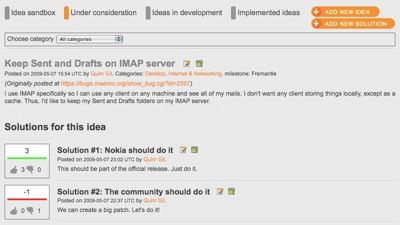
Bugzilla isn't really the best place for contributing and discussing new ideas for a software project. Like Ubuntu and openSUSE before us, the Maemo community now also has a better tool for this: Maemo Brainstorm. Maemo Brainstorm, developed as part of our efforts to the April 09 Sprint is a new web service that follows the model of Drupal's IdeaTorrent,...
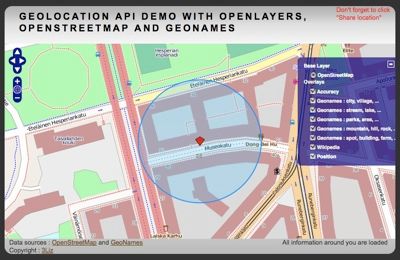
In our various GeoClue presentations we've been arguing that location comes in many flavors, of which GPS is only one. In many cases cell tower position or even WiFi connection can provide quite "good enough" location. On Mozilla Hacks they write about an OpenStreetMap-based browser location demo. I'd say the results are quite convincing: This is just a gentle reminder...
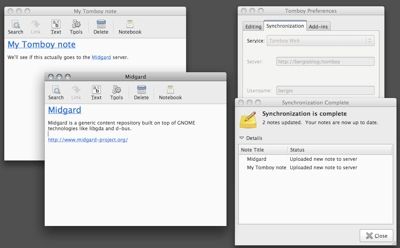
Some very interesting developments in desktop wiki land: Tomboy, the popular note-taking application for GNOME and OS X now supports web synchronization. The developers of Tomboy have launched Snowy, a web service that allows you to synchronize and access your notes online. As the API is documented, I decided to add support for it in Midgard too. This way the...
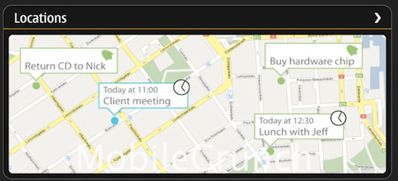
I've got no information on the validity of the claimed Harmattan screenshots that are floating around, but anyway wanted to comment on a part of it: Having your today's meetings on a map would be really cool. This is something I've wanted to do with OpenPSA ever since the days I spent motorcycling around office districts of Helsinki giving Midgard...
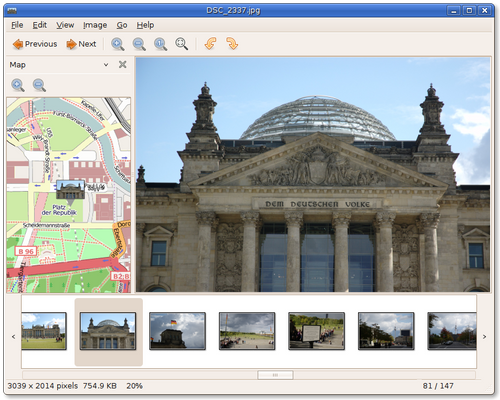
GUADEC will be arranged this year together with aKademy as the Gran Canaria Desktop Summit on July 3rd - 11th. The event will be an excellent opportunity to learn about some new technologies for the Linux desktop: GeoClue and libchamplain presentation (Sunday morning):GeoClue is the position information service, and libchamplain is a very nice Clutter map widget. Together they provide...

After the long wait, Midgard2 was today released to the world. This marks a big change in the scope of what Midgard is. Instead of building a CMS, we've built a generic content repository that can be utilized in web, mobile and desktop applications. As MDK wrote when announcing the Objective-C bindings for Midgard: ...it provides an objectified view to...
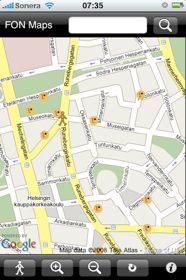
FON is a shared WiFi service. Couple of years ago they gave their routers for free in Finland, and since then I've been sharing my home connection with other FON users. And occasionally I've even roamed using FON connectivity provided by other users, using Devicescape to log my Internet Tablet automatically to the network. Now FON has released Fonera 2.0,...
CloudAve reviews the CrunchPad browsing device, and concludes that these days, a single computer is just not enough for all our needs: A tablet for lazy surfing, a netbook for travel, an iPhone for when we don’t even want to carry that much, a full laptop for everyday work, and even a full desktop as the multimedia workhorse: at these...
Midgard2, the content repository for multiple programming languages that we've all waited for so long is now in beta stage, and some services like Qaiku and St1 ReFuel already run on top of it. To get you started, here are some of the best Midgard2 blog posts out there: Midgard 2: More than just PHP, more than just CMS -...
Ars Technica has a nice introductory article about GeoClue: A multitude of factors are contributing to a mobile computing renaissance. Some of these factors include the growing availability of ubiquitous mobile Internet connectivity and the rising popularity of netbooks and other Internet-enabled small form-factor devices. These changes are inspiring a renewed interest in location-aware software and web services. A framework...
FOSDEM, held in Brussels on Feb 7th and 8th, is the most important free software event of the year in Europe. While I'm going to Poland instead of there this time, the event is an excellent opportunity to learn more about two projects I'm involved with: Midgard and a replicated P2P filesystem Sun Feb 8th 2009 at 16:20, Room Ferrer...
As it was for the Zend folks, 2008 was quite a busy year also in the Midgard-land. I think the last time there was so much activity and energy in the project must've been sometime in the early days. Here are some highlights from it: Midgard 2: finally a reality The big news of 2008 was that Midgard 2, the...

Today's N97 launch reminded me of a big mental difference between using Nokia or Apple phones: with Apple, you're merely a consumer, where Nokia's devices allow you to participate in the information flow, to be a producer. Back in 1932, Bertrand Russel wrote: The pleasures of urban populations have become mainly passive: seeing cinemas, watching football matches, listening to the...
Prompted by a recent COSS news release, I thought to write about two Summer of Code success stories: In addition to Google's Summer of Code, the Finnish Centre for Open Source Solutions (COSS) runs a localized version called Kesäkoodi. One of this year's projects was adding 3G configuration support for the GNOME Network Manager. This feature made it to Ubuntu...
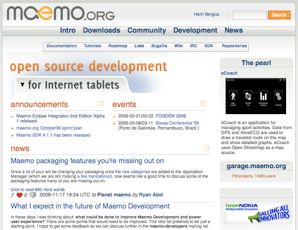
Maemo.org, the community site for Nokia's mobile Linux environment has this week been upgraded to 8.09.2 Ragnaroek, the much faster and long-term supported version of the Midgard framework. Thanks to Niels and Piotras for working with me on this! in October, I spent quite a bit of time optimizing this release, shaving off an estimated 60-70% of queries through some...
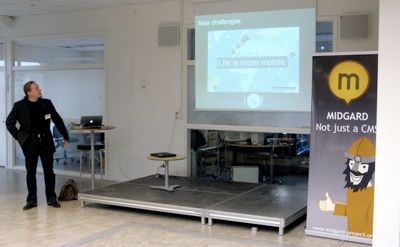
Last weekend we went to the Free Society Conference and Nordic Summit in Gothenburg to talk a bit about the new direction Midgard has been taking: making it a general replicated persistent storage library for multiple programming languages. The CMS itself is just an application using the library. The basic idea is that the cloud is a trap that will...
Midgard follows Ubuntu's synchronized release schedule, and releases packages for that platform, but otherwise we have little to do with the distribution. Still, I found the following in Mark Shuttleworth's Jaunty Jackalope announcement interesting: Another goal is the the blurring of web services and desktop applications. "Is it a deer? Is it a bunny? Or is it a weblication -...
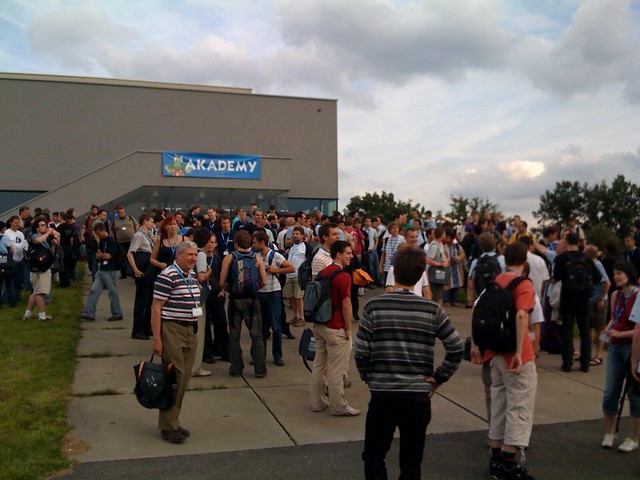
I'm currently in aKademy, the KDE conference, talking about adding the geographical context into the Linux desktop. GeoClue, our solution to this problem is built to be desktop-agnostic service, and therefore the same talk has been held in both GUADEC and aKademy. Here are some notes from the conference: There was quite a good amount of interest in GeoClue. Both...
Looks like 2008 is forming up to be a quite busy conference year, at least looking at my Dopplr page. Here are the events I'm speaking (or performing as is the case with Haedong Kumdo) in this fall: Aug 2nd: Haedong Kumdo Seminar in Mayo, Ireland: part of the Finnish team Aug 9th - 10th: aKademy in Sint-Katelijne-Waver, Belgium: Location-aware...
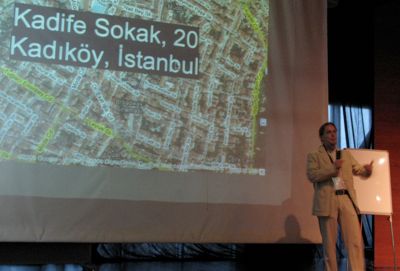
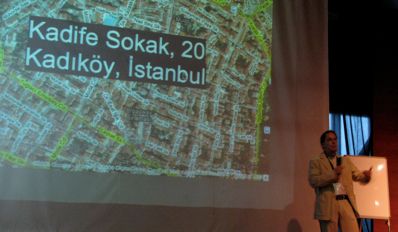
GUADEC is held in Istanbul this year, and as has been the custom in 2006 and 2007, I again came there to discuss making the Linux desktop location aware. This year I gave the "GeoClue and Gypsy - geo-information frameworks for mobile Linux desktops" talk together with Jussi Kukkonen and Iain Holmes. With Linux devices hitting more and more pockets...
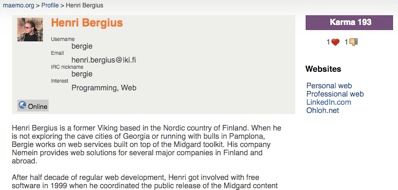
maemo.org has been having user profile pages for a while, and now it was time to overhaul their visual design. Here is the new design: In addition to new visuals, the profile page also now displays automatically collected data like user's latest blogs and favourited news items, and allows entering of new data like IRC nickname and multiple email addresses....

On Planet GNOME I can see lots of people have already arrived to Istanbul for next week's GUADEC conference. I'm also flying there on Tuesday. On Wednesday Jussi Kukkonen, Iain Holmes and I will be talking about location-aware applications with GeoClue and Gypsy at 3:30pm in X-Large. In preparation for the talk, be sure to check out my GeoClue slides...
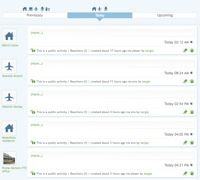
A more interesting piece of news today was that Nokia has acquired Plazes, the WiFi positioning company. I've been a Plazes user for quite a while and am using it as a position source for my website in addition to Fireeagle. I hope the acquisition will increase Plazes' resources to develop and expand the service to new areas of mobile...

GUADEC and aKademy will possibly be arranged together in 2009. As the events are looking for a venue, we at COSS (Centre for Open Source Solutions Finland) decided to apply to have the events in Tampere, Finland. Tampere is an old industrial city situated between two lakes. It has quite good flight connections (including Ryanair) to Europe, and fast rail...
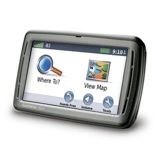
GPS manufacturer Garmin has recently released the modified sources of their nüvi 880 and 5000 in-car navigators. Looking at the packages reveals that these devices are powered by GNOME Mobile and GeoClue, the toolkit for making mobile Linux applications location-aware: On downloading and Inspecting the large (and nicely organized) 8xx source tarball (list of files here) its very apparent the...
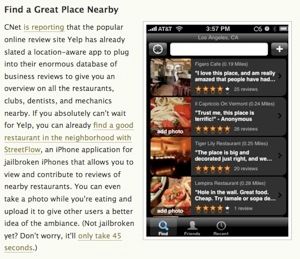
Lifehacker has an interesting story on how location-aware iPhone will change things: There's a lot of speculation as to what we can expect from next week's iPhone announcements, but there's one thing you can be sure of: The iPhone's location-aware features will change your life. Whether that means pinpointing your location on a Google Map (which iPhones already do), tracking...

I'm currently in Porto Alegre, Brazil attending the 9th International Free Software Forum (FISL) - a huge conference with some seven thousand participants. My talk in the event will be about GeoClue, the geo-information framework designed for Linux-based mobile devices. For those unable to be there or missing the 9am talk because of the parties tonight, the slides are now...

I've been using my N810 as sort of an universal communicator for a while now, and for this it has generally served well. The only thing I really miss is Skype video calls. But other than that, I haven't been using the tablet too much. In real-world usage I've found the browser way too unresponsive, and the RSS reader too...
I sat down with GeoClue maintainer (and my former SoC student) Jussi Kukkonen to discuss how the project has been moving forward, and the situation is looking quite good. To those unfamiliar with GeoClue, here is a quick intro: GeoClue is a modular geoinformation service built on top of the D-Bus messaging system. The goal of the GeoClue project is...
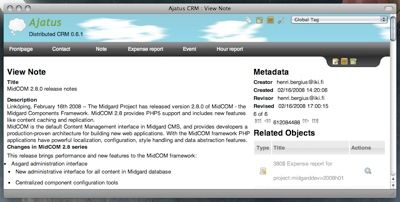
MIT Technology Review's 10 Emerging Technologies of 2008 report includes offline web applications as a rising trend. When developing Ajatus, our new P2P personal CRM the offline issue was often in our minds. We even wrote in the manifesto: Ideas may come to you when you're sitting in a bus, boarding an airplane or visiting a hospital. For a CRM...
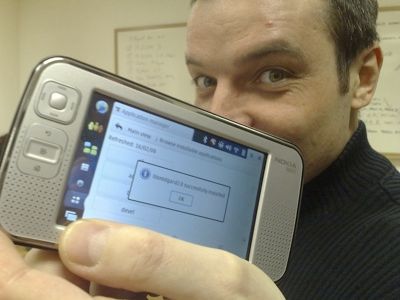
We're in Linköping, Sweden for the Midgard developer meeting, and I suddenly realised the Midgard community really likes Nokia's internet tablets. Not only does maemo.org run on Midgard (earlier this week "sideported" to MidCOM 2.8), but many Midgardians are also active Tableteers. So no wonder over the course of the meeting we saw the maemo application manager display an interesting...
Nokia has announced today that they're intending to acquire Trolltech, the Norwegian company behind the Qt cross-platform widget set and the Qtopia mobile platform. Ari Jaaksi from Nokia writes: Both GNOME and KDE are very interesting and active projects. Our strong participation in the Gnome community and the new access to KDE and Trolltech's technology puts us in an unique...
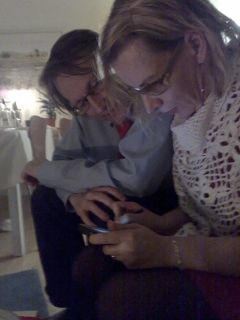
This is a guest blog by Outi and Jyrki Wahlstedt. I loaned my N800 to them in late December and here they write about their experiences with the device. Our Internet tablet is present almost imperceptibly in our life from dawn till dusk. It wakes us up in the morning, and tells news in the evening. It is small and...
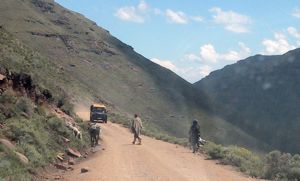
A BBC article is reporting how cell phones have become ubiquitous in the developing world, and how they instead of "regular" computers will be the communications, learning and business platform in many of those regions. If I had told you ten years ago that by the end of 2007 there would be an international network of wirelessly-connected computers throughout the...
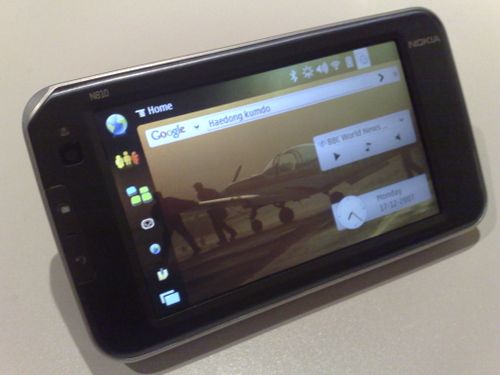
And I’m not talking about vodka this time, but instead about the latest internet tablet from Nokia, the N810. I’ve now had the device for some weeks, and it has really started to replace the laptop in many situations.
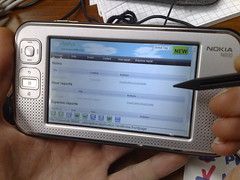
Nokia’s Linux-based internet tablet was Amazon’s best selling computer in 2007, and top 3 personal computer in holiday sales. Congratulations to the maemo team!
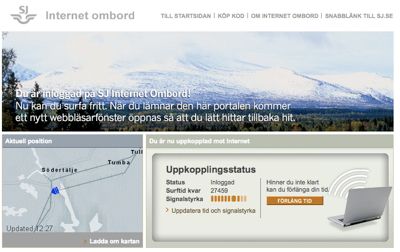
Today Finland is celebrating 90th birthday of the Republic, and so it is appropriate to write about how things are better in Sweden, where I’m visiting the first Scandinavian Free Software Conference.

Amazon’s e-book reader Kindle was launched today, and it looks quite interesting:
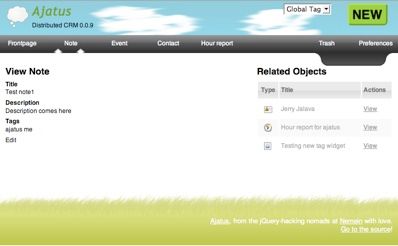
While there is no public release yet, I though to give a heads-up on a project we’re working on with Jerry: Ajatus is a distributed, or peer-to-peer CRM system built on top of CouchDb.
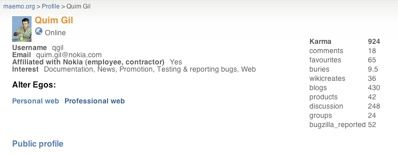
Karma: The total effect of a person’s actions and conduct during the successive phases of his existence, regarded as determining his next incarnation. (wiktionary)
GigaOM has a very interesting article on the new N810 internet tablet, and how it will be relevant for the developing world:
The new Maemo developer device program opened the user profile system on maemo.org. With it, we can now use profile avatars as the hackergotchis on Planet Maemo:
Quim wrote earlier on why red hearts matter in maemo news. The red hearts are important as they bring important news items forward in the maemo social news aggregator. But sometimes there are also news items that are not at all relevant to the maemo community. To solve the problem with them we’ve now added a burying option:
CouchDB is a very interesting evolution in open source data storage: an ad-hoc document database with replication support. I heard the first time about CouchDB when Jan Lehnardt was presenting it in FrOSCon a month ago, and became immediately very interested.
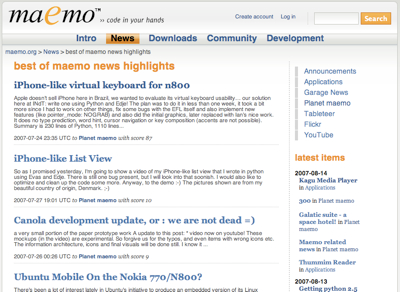
Today has been a big day for maemo.org: not only was the Maemo Community Calendar released for beta testing, but we also launched the new Social News section on the site. Social news is an area where users can easily with one glance see all interesting things happening at the moment in the maemo world.
Bruce Sterling is running a fictional geoblog Dispatches From the Hyperlocal Future on Wired. Much of it deals with the possibilities that the connection between GeoRSS, Microformats and neogeography with mobile devices will bring:
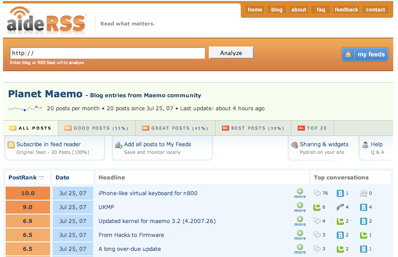
I’ve started working on a new Social News section for maemo.org. The idea of this area is to provide a centralized view on what is happening at the moment in the maemo community.

Last weekend and this week I’ve been off to State of the Map in Manchester and GUADEC in Birmingham to speak about the GeoClue project with Andrew Turner and Tuomas Kuosmanen.
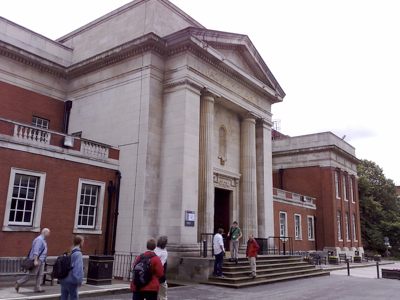
State of the Map, the OpenStreetMap conference was held this weekend in Manchester University, with about 100 attendees.
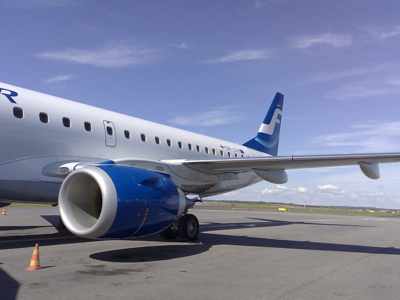
This is probably old news to most, but since I usually fly SAS my flight yesterday to Manchester for the State of the Map and GUADEC conferences was the first time I ran into Finnair’s check-in SMS service.
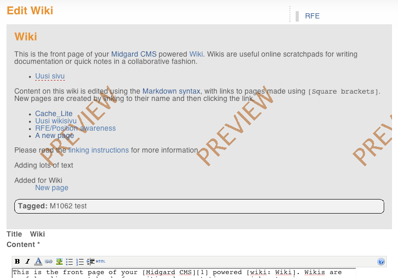
Since Maemo.org started using the Midgard wiki component there has been discussion on whether it is feature-complete or easy enough to use. Main complaints have been about the “latest changes” view not supporting sub-wikis and missing Markdown documentation.
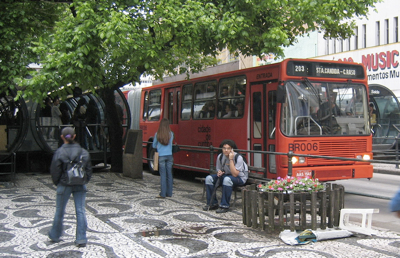
Public transport is efficient, cheap and quite green, which is why I’ve been very happy about new services hitting Helsinki Public Transport, like WiFi connectivity, and of the fact that nowadays it is possibly to wait for Espooi buses comfortably inside and underground. However, having used public transport in dozens of cities and countries, I’d say the biggest hindrance to...
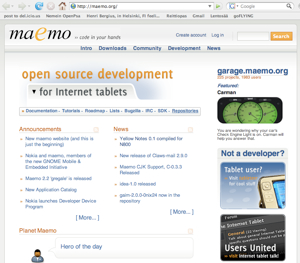
We helped to launch two interesting new Midgard-powered sites yesterday.
This summer I will be at these events:
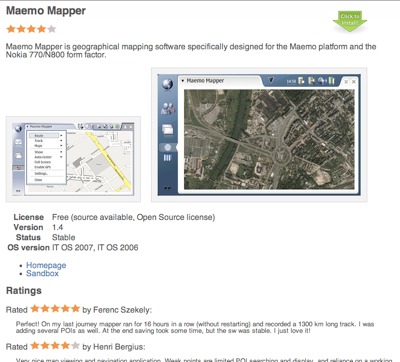
Maemo Downloads, the application catalog for Nokia internet tablets is again open for business.
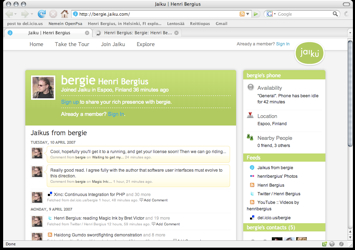
This morning I’ve been exploring the Jaiku service. Jaiku is a combination of a social web service and a mobile phone application that takes the personal status and presence ideas of Twitter quite a bit further. The idea is to combine data from various services to provide a presence feed that can be shared with friends and colleagues.
The rise of web applications like Gmail and Basecamp is bringing the good old offline vs. online debate again into picture.
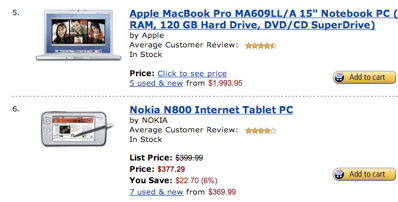
As a Maemo application developer, I of course wonder how many N800 or 770 internet tablets are out there. Nokia hasn’t released any figures as far as I know, but looking at Amazon’s Computers & PC Hardware top sellers, it seems that at least N800 is selling well. Today it was on sixth place, behind some different MacBook and Toshiba...
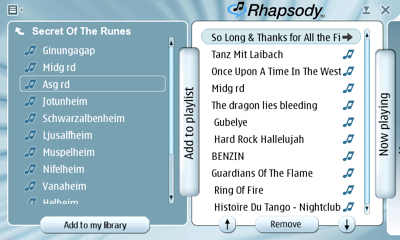
Rhapsody, the music subscription service from Real Networks is now available for Nokia’s N800 Internet Tablet. While so far the music library Kerttu and I have accumulated has been perfectly enough for me, I decided to give Rhapsody a shot.
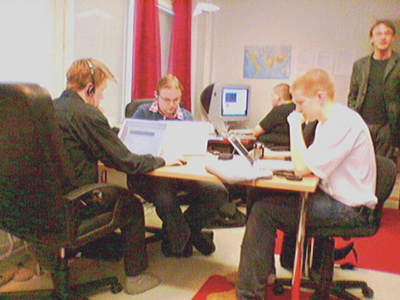
Via #maemo I heard that there is a Nokia-made camera application for the N800. Here’s a quick first picture from the office:
Maemo, the development platform for Nokia’s Internet Tablets is one of the organizations participating in Google Summer of Code 2007. SoC is a program that offers student developers stipends to write code for various open source projects.
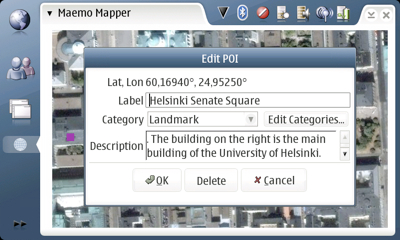
Maemo Mapper is a map browsing and GPS navigation application for the Nokia Internet Tablets. So far this useful application has been in the legal grey area by relying on providers like Google Maps and Microsoft Virtual Earth for its map tiles. This probably violates their terms of service and may cause problems later on.
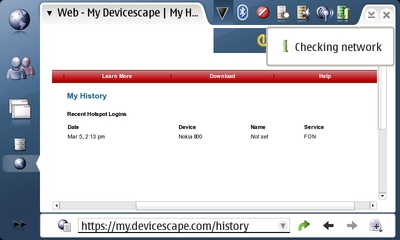
I have blogged earlier of our plans to add WiFi autologin support to MaemoPlazer. However, I found out that there is already an autologin applet for the N800: Devicescape
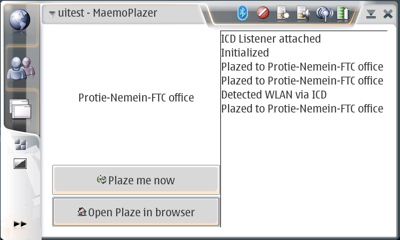
We had another Maemo hacking night here at the office. The plan was to write a proper UI for the Maemo Plazer, and integrate it with the GeoClue framework. Both of these were partially completed, but will need more thought and testing. Here’s a quick snapshot of the new UI:
I'm posting this with the Maemo Blog application. We had a lunch with Santtu who wrote it, and I tried to demo how it doesn't work with my blog. And suddenly it did! Reverse demo effect ;-)
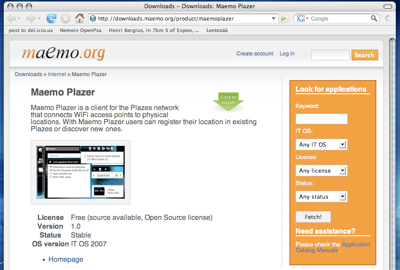
Thanks to help from Ferenc, Maemo Plazer, the Plazes client for the Nokia N800 Internet Tablet is now available:
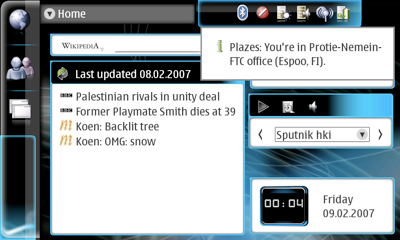
Intergalactic hitchhikers get another treat: We have updated the older Maemo Plazer to work with the new Plazer API and the Maemo 3.0 that is on N800. We also integrated it more closely with the UI:
The fact that our VoIP provider has a proprietary closed network has bothered me for a while. In their N800 review, Spicy Gadget Roll put it well: The two instant messengers found in the N800 are Jabber and Google Talk. Both instant messengers are built on open standards, which I whole-heartedly believe in. There’s a lot of confusion as to...

Maybe I’m a neo-luddite, but this sounds a bit scary:
N800, the successor to Nokia’s 770 Maemo-powered Linux internet tablet was apparently unleashed yesterday by CompUSA. While Nokia’s site is still quiet on the new device, there are already unboxing pictures out there. I’ve been using my 770 quite actively as a mobile internet terminal since I got it in February last year. While the software is occasionally buggy, it...
The City of Helsinki, despite some of its failings, is also doing some cool stuff. Examples include promotion of greener rail traffic, and increasing number of free WiFi hotspots. So far these have been stationary, but now Helsinki City Transport is piloting WiFi in buses and trams. Helsingin Sanomat reports: Some Helsinki buses and trams will deploy wireless internet access...
The hard drive of my MacBook died today, meaning that I will be without a development box for at least some days. In the meanwhile my 770 will act as the main computer making me at least available via Jabber. Will be interesting experiment on the capabilities of the little handheld. Accordingly, this entry was written with Maemo Blog. Time...
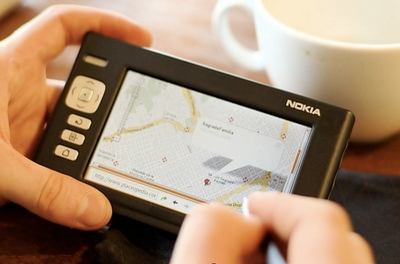
I was discussing this IT problem at ESEEI today: Mamona, or Castor oil plant is an oil-producing plant that can be grown in relatively dry areas. Farmers of dry areas in the state of Paraná, Brazil are generally relatively poor. Petrobras has a process where Mamona seeds can be used to produce biodiesel fuel. The IT problem related to this...
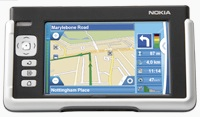
Nokia has released a Navigation kit for 770, providing GPS navigation capabilities to this Linux device. The navigation software used is Navicore Personal which application requires Tablet OS 2006. The announcement says:
I will be flying to Foz do Iguacu tomorrow for the LatinoWare 2006 conference. My talk on Digital Business Ecosystem is scheduled at 2pm on thursday the 16th. As I’ve already given two earlier talks on DBE in Brazil, I will this time skip most of the politics and focus on how DBE can make everybody in the business of...
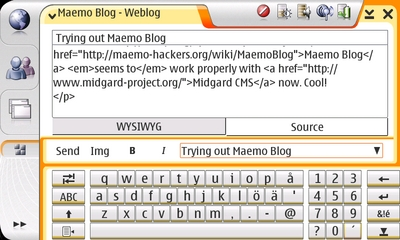
As reported by Inz, Maemo Blog seems to work properly with Midgard CMS now. Cool!
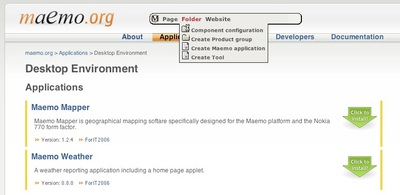
Maemo, the open source mobile device platform developed by Nokia is switching its web infrastructure to Midgard CMS. Ferenc Szekely writes:
I returned from a trip to Lapland and Russia today, and noticed that the battery of my Macbook had somehow died while I was away. Now the computer doesn’t recognize it at all.

Public Geo Data is sending an open letter to the European council of environment ministers to request that the access to geographical databases would be opened to the public. While some data is open and available, we’re still far behind the US in this issue.
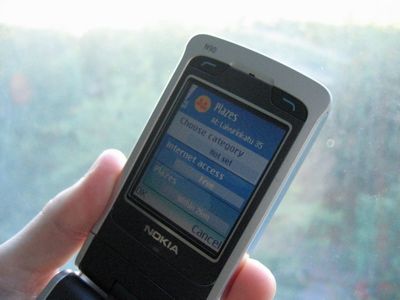
Plazes is a service for connecting wireless access points into physical locations. Previously this has only worked with Wi-FI networks, but now they have launched a mobile version that uses the cell phone network base station identifiers for the same thing.
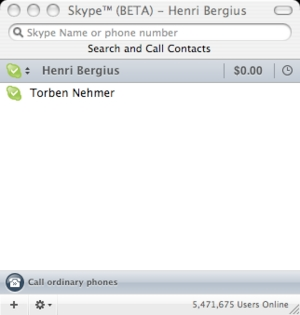
While I appreciate the fact that Gizmo uses open standards for internet telephony, and that it is available for my Nokia 770, it still has to be mentioned that its user interface has a lot to learn from the latest Skype beta. You just have to love the simple, purpose-driven UI:
New York Times has an article about using cellphones as travel guides in Japan:
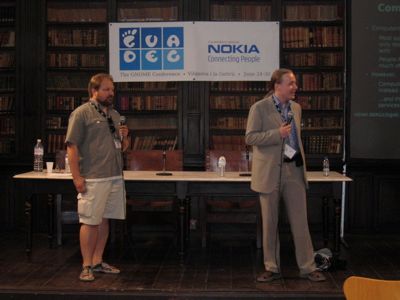
We held the Feeds, Synchronization and the Free Software Desktop talk with Tigert today. Despite the Fluendo party the night before, there was a quite good crowd in the old Museu Balaguer library.
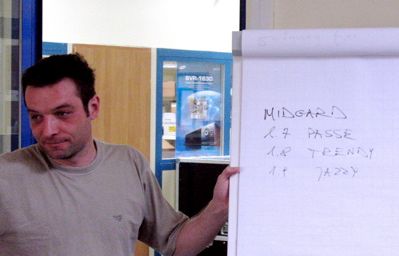
We spent the last two days driving from Helsinki to Poznan, Poland for the Midgard Developer Meeting. This proved to be a good field test for Maemo 2.0 as we needed to instruct people back home about some project details using Google Talk.
I’ve just downloaded the Internet Tablet OS 2006 edition Beta to my Nokia 770. The software feels a lot faster, and the new features are really cool.

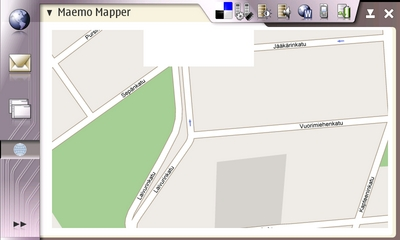
I’ve written before how Nokia 770 is the real Hitchhiker’s Guide to the Galaxy. The device already gives an ubiquitous access to the web, and now with the upcoming new OS release, to Jabber chat and VoIP calls.
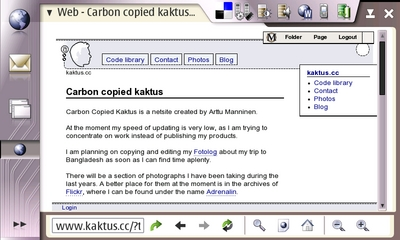
Arttu and others at the office are now tuning the Midgard UI with these goals
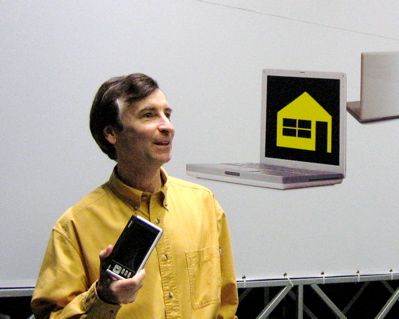
Today I went to see Tim Ney’s talk about Free Software Innovation in the 7th FISL conference here in Brazil. The talk started with a birthday greeting for Queen Elizabeth II.
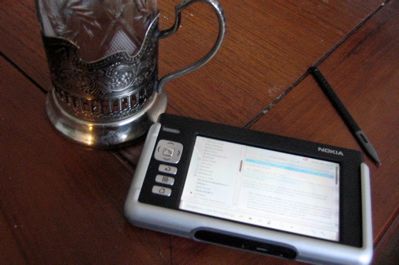
In order to make my news-reading process less time consuming, I’ve now switched from NetNewsWire running all the time on my PowerBook to the Bloglines web service primarily used through my Nokia 770 handheld browser.
Every now and then iSync simply stops working. Apart from the other problems, I’m seeing a lot of “Unable to connect”.
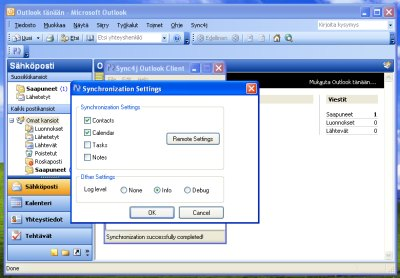
We have just contracted Yukatan to work on integrating SyncML support into OpenPsa 2. The idea is to enable users to synchronize their web-based calendar and contact registry with cell phones, PDAs and Outlook.
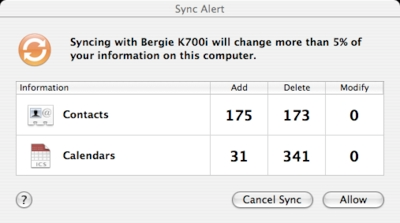
It seems Apple’s iSync and Sony-Ericsson phones are having a severe synchronization problem this month. Rambo had an alarming story:
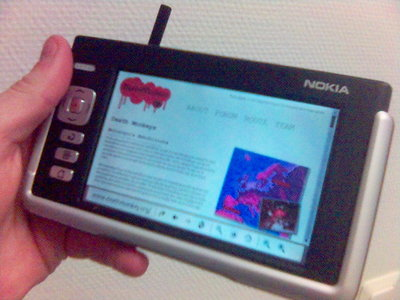
I had the Nokia 770 web browser device waiting on my desk as I returned from South Africa. 770 is a nice, small, Linux-powered internet appliance that is able to utilize either a WLAN connection, or mobile phone’s connection via Bluetooth.
Karoliina Salminen talks about WikiPedia and Nokia 770 being the real Hitchhiker’s Guide to the Galaxy:
For some odd reason, Sonera decides to stop supporting the MTN free SMS service.